
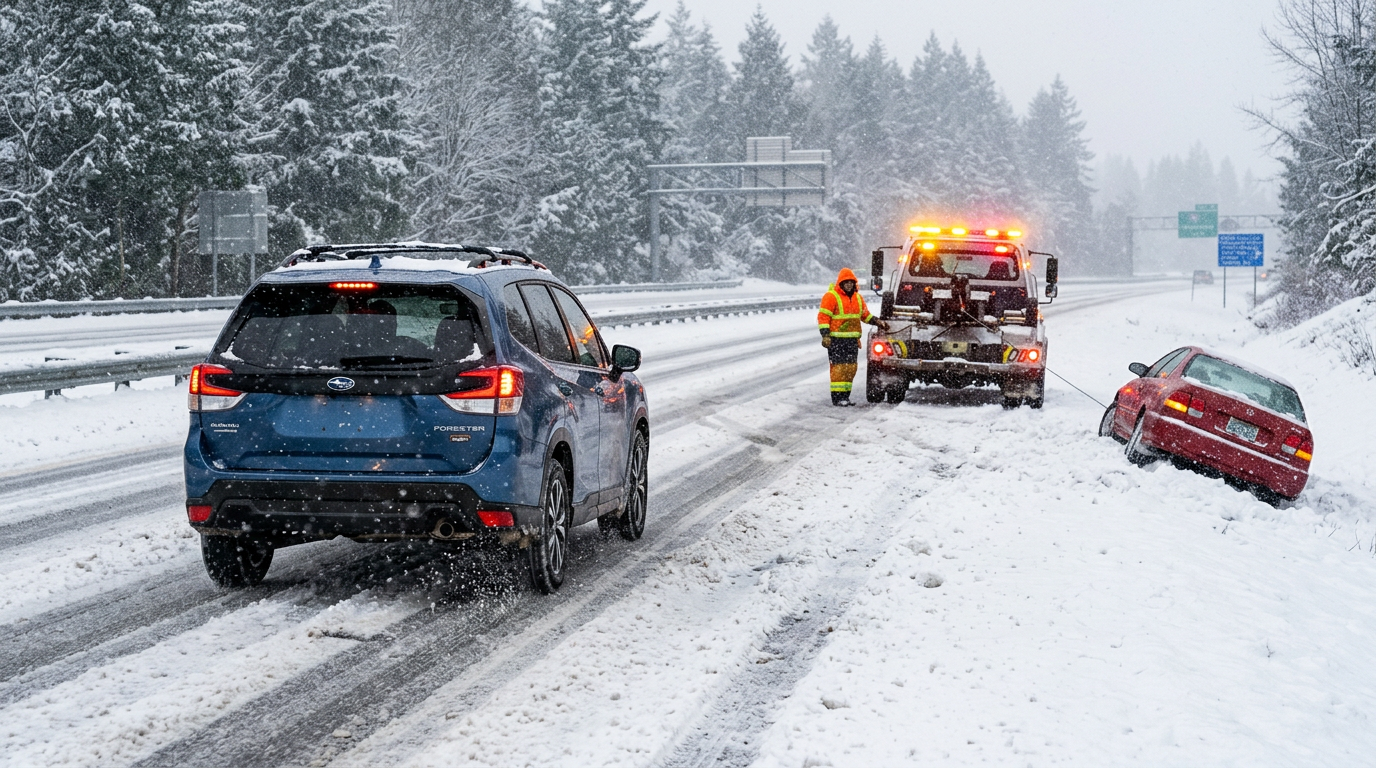
Preparing a 2026 Subaru for Central Iowa winter driving requires testing battery cold-cranking capacity, verifying engine coolant freeze protection down to sub-zero temperatures, switching to low-viscosity full synthetic engine oil, replacing worn wiper blades with winter-grade units, and inspecting tire tread depth while setting pressures to cold, door-jamb specifications.
Sub-zero temperatures, heavy road salt, and sudden ice storms demand thorough mechanical preparation before snow falls. While Subaru vehicles arrive equipped with continuous drive technology, winter weather strains vehicle electrical systems, cooling loops, and rubber components. When drivers bring their vehicles in for seasonal checkups ahead of freeze warnings, our service team prioritizes testing battery cold-cranking capacity and evaluating tire wear uniformity across all four wheels. Addressing these vital areas before freezing conditions arrive prevents cold-start failures and maintains proper driveline operation.
A complete winter maintenance plan focuses on five critical service steps:
- Testing the battery health and cleaning terminal corrosion to ensure adequate starting power during severe cold snaps.
- Flushing or topping off engine coolant with a 50/50 antifreeze mixture rated for sub-zero protection.
- Installing fresh 0W-20 or manufacturer-recommended synthetic engine oil for fast oil flow during freezing engine starts.
- Inspecting tire tread depth, verifying matching tire circumferences, and adjusting cold tire pressures to the vehicle door placard.
- Replacing standard windshield wipers with heavy-duty winter blades and filling the fluid reservoir with sub-zero washer fluid.
Routine highway commutes across Des Moines during prolonged winter cold snaps test every mechanical system in your vehicle. Taking care of preventative maintenance ahead of time keeps your Subaru running reliably through the harshest winter weather. For professional winter inspection and fluid testing, visit our Urbandale service center at 9625 Hickman Rd or get in touch by calling our team to speak with a factory-trained technician.
Table of Contents
- How Does Subaru Symmetrical AWD Work in Icy and Snowy Central Iowa Conditions?
- Winter Tires vs. All-Season Tires: Does AWD Alone Keep You Safe on Frozen Roads?
- How Should Urbandale Drivers Inspect Tires and Maintain AWD Systems Before Snow Hits?
- Why Are Engine Coolant Flushes, Oil Viscosity, and Battery Services Essential Before Winter?
- Common Questions About Subaru Winter Maintenance
- Schedule Your Subaru Winter Prep Service at Ramsey Subaru
How Does Subaru Symmetrical AWD Work in Icy and Snowy Central Iowa Conditions?
Subaru Symmetrical All-Wheel Drive operates by continuously routing power to all four wheels through a centered, longitudinally mounted Boxer engine powertrain layout with equal-length front axle shafts. This symmetrical architecture provides ideal left-right balance, neutral handling, and immediate torque distribution whenever sensors detect wheel slip on snow or ice.
Unlike part-time or front-wheel-drive-based slip-and-grip systems that only send power to the rear wheels after traction is lost, Subaru's continuous system actively balances power distribution. The inline arrangement keeps weight evenly distributed across the chassis, reducing unexpected pitch or yaw when navigating rutted snow or slush-covered roads. When paired with Vehicle Dynamics Control, the system applies subtle braking pressure to slipping individual wheels while redirecting engine torque to the tires with the most physical grip.
For deeper snow accumulations and steep unplowed grades, select 2026 Subaru models feature advanced X-MODE settings. This system recalibrates engine throttle response, alters transmission engagement, increases front/rear wheel lockup, and optimizes traction control to extract maximum grip from frozen surfaces. Utilizing genuine OEM Subaru winter accessories and replacement parts ensures that drive components, sensors, and wheel bearings operate within precise factory tolerances throughout the coldest months of the year.
Winter Tires vs. All-Season Tires: Does AWD Alone Keep You Safe on Frozen Roads?
All-wheel drive assists with acceleration and starting traction on slippery roads, but it cannot increase braking or cornering grip on ice, making dedicated winter tires essential for sub-freezing driving safety. Because all-wheel drive only manages how engine power is delivered to the wheels, stopping distances and steering stability depend entirely on tire rubber flexibility and tread design.
Standard all-season tire compounds begin to harden and lose elasticity when ambient temperatures drop below 45 degrees Fahrenheit. Once hardened, all-season rubber struggles to conform to the micro-textures of frozen asphalt and packed snow. In contrast, dedicated winter tires feature soft silica compounds that remain flexible in severe cold, along with deep tread blocks and high-density siping designed to bite into snow and evacuate slush.
Tires carrying the 3PMSF (Three-Peak Mountain Snowflake) symbol meet standardized snow-traction testing criteria. On frozen or icy pavement, vehicles equipped with dedicated winter tires can stop up to 30 feet shorter from highway speeds compared to those on standard all-season tires—a distance equal to nearly two full car lengths. While Subaru drive technology helps you launch smoothly from a stoplight, dedicated winter tires ensure you can turn and stop safely when faced with unexpected hazards on slick roads.
How Should Urbandale Drivers Inspect Tires and Maintain AWD Systems Before Snow Hits?
Inspecting tires before winter requires verifying cold inflation pressures, checking tread wear depth across all four positions, and confirming that all tires share identical sizing and rolling circumferences to protect the central differential.
Suburban driving along Douglas Avenue in Urbandale involves frequent stop-and-go navigation over frozen pavement, icy bridge decks, and slushy intersections. Ambient tire pressure drops approximately 1 PSI for every 10-degree Fahrenheit drop in outside temperature. Drivers should check tire pressure first thing in the morning using a reliable pressure gauge, inflating tires to the exact specification printed on the driver-side door-jamb placard rather than the maximum pressure listed on the tire sidewall.
Maintaining equal tread depth across all four tires is mandatory for Subaru drive systems. Large variance in tread wear creates slight differences in wheel rotational speeds between the front and rear axles. Over time, this rotational imbalance places continuous mechanical strain on the transfer clutches and center differential, risking costly driveline damage.
Key pre-winter tire checks include:
- Measuring tread depth on every tire using a tread depth gauge to ensure at least 4/32-inch of tread remains for snow traction.
- Confirming all four tires match in brand, model, size, load index, and speed rating.
- Inspecting tire sidewalls for cracks, cuts, or impact bulges caused by cold-weather pothole strikes.
- Performing tire rotations every 6,000 miles to promote uniform wear across both axles.
Why Are Engine Coolant Flushes, Oil Viscosity, and Battery Services Essential Before Winter?
Sub-zero temperatures severely degrade battery chemical output and thicken motor oil, while improper antifreeze concentration risks engine block cracking if internal cooling passages freeze solid.
Engine coolant does more than prevent overheating in summer; it contains anti-freeze agents and corrosion inhibitors essential for sub-zero operation. A 50/50 mixture of genuine Subaru long-life coolant and distilled water provides freeze protection down to -30 degrees Fahrenheit while preventing interior rust inside the aluminum engine block. Testing coolant strength with a refractometer ensures the fluid maintains proper freezing protection before extreme weather arrives.
Cold engine starts place extreme load on motor oil. Utilizing the correct 0W-20 synthetic oil viscosity guarantees rapid oil flow to critical overhead camshafts and cylinder heads within seconds of turning the ignition key during freezing weather. Furthermore, severe winter road salt usage across Central Iowa accelerates chassis oxidation, making pre-winter underbody washes and brake component inspections critical for long-term vehicle health.
Cold weather also reduces battery chemical activity, cutting starting capacity by up to 50 percent in sub-zero temperatures. A battery health test measures cold-cranking amps ( CCA) to identify weakening cells before they fail on a freezing morning. Protect your vehicle this winter by scheduling a winter maintenance inspection with our certified service center today.
Common Questions About Subaru Winter Maintenance
Q: How does cold winter weather affect tire pressure in a Subaru?
A: Ambient air pressure inside a tire drops approximately 1 PSI for every 10-degree Fahrenheit decrease in outside temperature. During sudden temperature drops, your tire pressure monitoring system light may illuminate. Check tire pressures when the tires are cold against the door-jamb placard specification and inflate them as needed to ensure proper tread contact and protect fuel efficiency.
Q: Can using mismatched tires damage a Subaru Symmetrical AWD transfer case?
A: Yes, running mismatched tire sizes or significantly uneven tread wear between tires creates different rotational circumferences between wheels. This forces the transfer case and center differential to compensate continuously, generating excess heat and mechanical friction that can cause severe internal driveline wear or failure. Always replace winter tires in complete sets of four matching tires.
Q: How often should windshield wiper blades and washer fluid be serviced before winter?
A: Inspect wiper blades every six months and replace them immediately if you notice streaking, chatter, or tearing rubber. Before winter arrives, replace standard wiper blades with heavy-duty winter blades equipped with protective rubber boots that prevent ice buildup. Fill the washer fluid reservoir bi-weekly with winter-grade fluid rated for -20 degrees Fahrenheit or lower to prevent freezing on the windshield.
Q: What engine oil viscosity is required for cold winter starts in a 2026 Subaru?
A: Most 2026 Subaru engines utilize 0W-20 full synthetic motor oil. The "0W" rating indicates low-temperature viscosity, ensuring the oil flows quickly to lubricate engine bearings, valvetrain components, and turbochargers during cold sub-zero starts without placing excessive strain on the starter motor and battery.
Q: Does Subaru Roadside Assistance cover winter battery jump-starts and flat tires?
A: Yes, every new Subaru includes standard coverage under the Subaru Limited Warranty that provides 24/7 emergency roadside care. Services include emergency battery jump-starts, flat tire changes to install your spare, lock-out service, and towing to the nearest authorized retailer. For immediate emergency service, contact Subaru Roadside Assistance: 1-800-261-2155.
Schedule Your Subaru Winter Prep Service at Ramsey Subaru
Preparing your vehicle for severe cold weather ensures safety, reliability, and peace of mind on slippery winter roads. Our factory-trained service technicians at Ramsey Subaru specialize in multi-point winter inspections, tire installation, battery load testing, and cooling system flushes tailored specifically for your 2026 Subaru.
To prepare your vehicle for upcoming snow and ice, get directions to Ramsey Subaru or reach our service team directly at (515) 278-6400 to set up your seasonal service appointment.
© 2026 Ramsey Subaru. All rights reserved.