
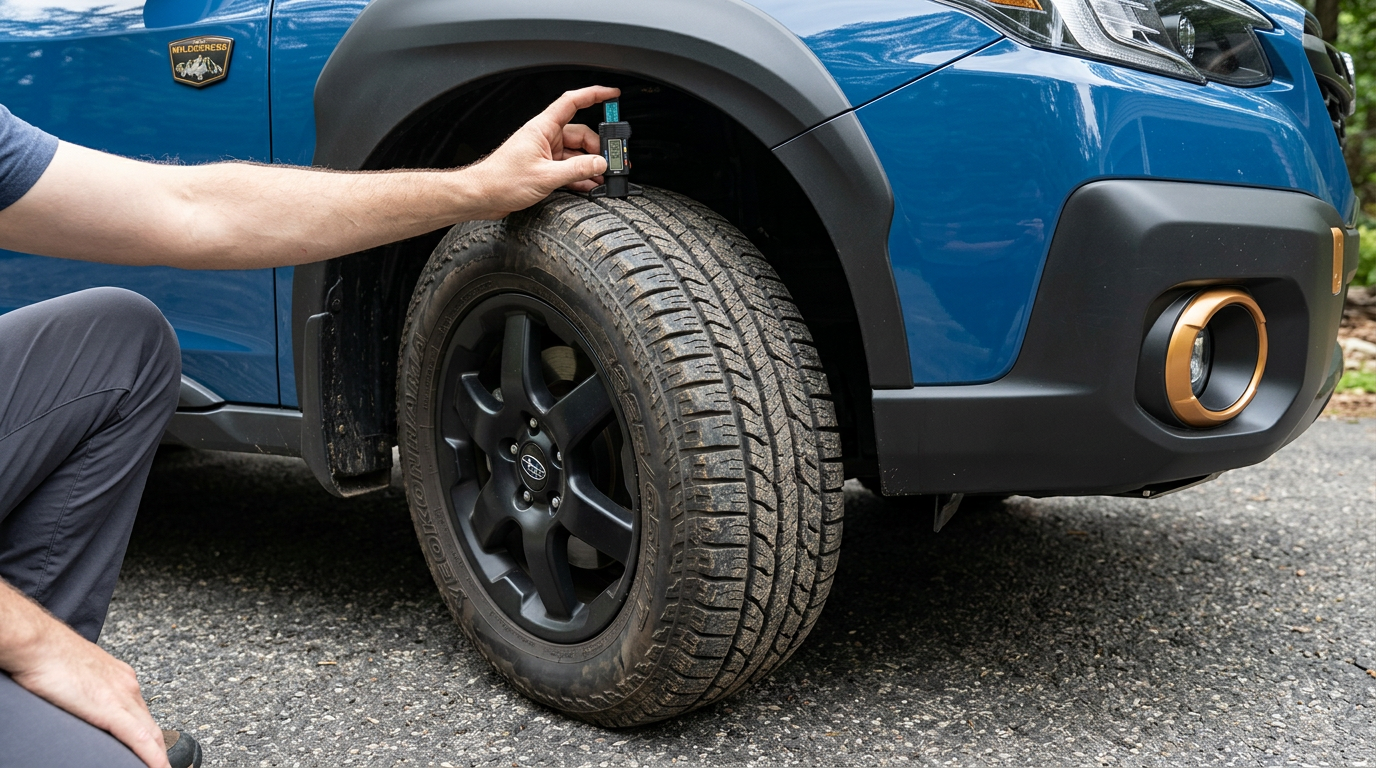
Preparing a Subaru for severe winter driving requires testing the battery's cold-cranking capacity, inspecting brake systems, verifying coolant concentration, switching to sub-zero washer fluid, maintaining proper tire inflation, and installing dedicated winter tires if driving on slick ice. While Symmetrical All-Wheel Drive manages engine torque to maintain acceleration grip, mechanical readiness ensures your vehicle stops, steers, and starts reliably when temperatures drop below freezing.
When temperatures begin to plunge, preparing your vehicle involves a systematic inspection of all primary safety and mechanical systems. Cold weather puts heightened physical stress on rubber hoses, belts, battery chemistry, and hydraulic fluids. Ensuring that your engine oil is fresh and your coolant mixture is properly balanced prevents frozen engine blocks and delayed oil circulation during heavy frosts.
Our service advisors notice that drivers frequently ask whether full winter maintenance is necessary when their vehicle is already equipped with full-time all-wheel drive. Drivetrain traction helps move the vehicle forward, but it does not alter mechanical stopping distance on slick ice or prevent a weak battery from failing on a sub-zero morning. Taking time to inspect lighting, heating systems, wiper blades, and undercarriage components ensures your vehicle remains dependable through tough Midwestern squalls.
For comprehensive seasonal maintenance, drivers can stop by our Urbandale service facility for a full multi-point inspection or speak with our certified technicians directly by calling (515) 278-6400.
Table of Contents
- Are Winter Tires Necessary on a Subaru with Symmetrical AWD in Central Iowa?
- How Much Do Dedicated Winter Tire and Wheel Packages Cost for an Outback or Forester?
- How Does Subaru Symmetrical AWD Work on Icy Roads Compared to Part-Time 4WD?
- Should You Change Subaru Engine Oil Viscosity and Fluids Before Extreme Cold?
- Should You Apply Underbody Rust Protection and Install Remote Engine Start?
- How Often Should You Inspect Wiper Blades, Washer Fluid, and Battery Health for Winter Driving?
- Frequently Asked Questions About Subaru Winter Care
- Prepare Your Subaru for Ice and Snow at Ramsey Subaru
Are Winter Tires Necessary on a Subaru with Symmetrical AWD in Central Iowa?
Dedicated winter tires are necessary on a Subaru in sub-freezing conditions because all-season tire tread compounds harden below 45 degrees Fahrenheit, reducing rubber elasticity, cornering stability, and braking grip on ice regardless of all-wheel drive capability. While Symmetrical All-Wheel Drive efficiently distributes engine power across all four wheels during acceleration, only dedicated winter tires provide the specialized tread biting edges and soft rubber flexibility required to shorten stopping distances on hard-packed snow.
All-season tires utilize rubber compounds formulated to balance wear longevity in warm summer conditions with moderate traction during light rain. Once ambient temperatures remain consistently below freezing, all-season tread stiffens, acting like hard plastic against icy pavement. Dedicated winter tires utilize flexible hydrophilic silica compounds and deep siping patterns that wick away surface water films, gripping micro-textures on frozen roads where standard tires slip.
The physics of stopping and steering rely entirely on tire-to-road friction, independent of drivetrain design. When braking on hard glare ice, a vehicle equipped with winter tires can stop up to 30 percent faster than the exact same vehicle riding on standard all-season rubber. For daily drivers navigating urban winter slush around Des Moines, having winter tires installed provides critical stopping margin during sudden emergency stops on bridge decks and high-speed highway traffic.
To prepare your vehicle for winter weather, consider scheduling a winter tire service appointment online or browse our catalog for ordering genuine Subaru winter accessories and wheel packages built specifically for your model.
How Much Do Dedicated Winter Tire and Wheel Packages Cost for an Outback or Forester?
A set of four dedicated winter tires for a Subaru crossover can vary in price, and adding a dedicated set of steel or matching alloy wheels can change the total package cost. Contact the dealership for current pricing. Investing in a pre-mounted wheel and tire package reduces long-term seasonal mounting and balancing fees, protects your original factory alloy wheels from harsh road chemical corrosion, and simplifies twice-yearly changeovers.
When evaluating tire and wheel packages for crossovers like the Forester or Outback, vehicle owners have two main purchasing paths:
- Bare Winter Tires: Mounting winter rubber directly onto your factory wheels requires dismounting your summer or all-season tires every autumn and spring. This approach carries lower initial upfront costs but incurs recurring dismount, valve stem replacement, and re-balancing service fees twice per year.
- Complete Tire and Wheel Packages: Purchasing dedicated 17-inch or 18-inch steel or aluminum wheels pre-fitted with winter tires requires a higher initial investment but eliminates rim bead wear and saves money on labor costs over several seasons.
Additionally, fitting dedicated wheels with individual Tire Pressure Monitoring System (TPMS) sensors ensures your vehicle's safety electronics continue to monitor inflation accurately in sub-zero weather. Over a typical four-year ownership span, using dedicated winter tires also extends the lifespan of your original all-season tires, balancing out the overall cost of vehicle ownership.
How Does Subaru Symmetrical AWD Work on Icy Roads Compared to Part-Time 4WD?
Subaru Symmetrical All-Wheel Drive continuously supplies power to all four wheels while using active electronic torque distribution to instantly shift power to wheels with grip, avoiding the driveline binding and manual shifting associated with traditional part-time four-wheel drive. Because part-time 4WD locks the front and rear axles together at a rigid 50/50 split, it cannot be safely used on mixed icy and dry highway pavement without causing mechanical hopping or steering resistance during turns.
The core advantage of Symmetrical All-Wheel Drive lies in its longitudinal engine layout and balanced, linear drivetrain configuration. Power flows in a straight line from the BOXER engine through the Lineartronic CVT to front and rear differentials. Steering angle sensors, wheel speed sensors, and vehicle yaw rate monitors evaluate traction hundreds of times per second. If front wheels begin to lose traction on black ice, the system seamlessly redirects torque toward the rear axle without any driver intervention.
Models featuring advanced terrain response systems include dual-mode X-MODE, which optimizes engine response, transmission gear ratios, and VDC braking intervention for specific low-traction conditions. Selecting Deep Snow/Mud or Snow/Dirt modes allows controlled wheel slip to paddle through heavy snow accumulation while controlling hill descent speed on steep icy declines.
| Drivetrain Feature | Subaru Symmetrical AWD | Part-Time 4WD Systems |
|---|---|---|
| Engagement Method | Continuous Full-Time Automatic | Manual Lever or Electronic Switch |
| Highway Dry/Ice Mixed Surface Driving | Safe with zero driveline binding | Risk of driveline windup and axle damage |
| Torque Distribution | Dynamic electronic split based on wheel slip | Rigid 50/50 locked front/rear axle split |
| Cornering on Slick Pavement | Smooth differential speed variation | Heavy steering feedback and tire scrubbing |
Should You Change Subaru Engine Oil Viscosity and Fluids Before Extreme Cold?
Changing to a different engine oil viscosity before winter is unnecessary as long as you use the factory-recommended 0W-20 full synthetic oil or 5W-30 full synthetic oil, which is specifically engineered to maintain rapid flow during sub-zero cold starts. Modern synthetic formulations maintain critical oil film strength in high engine heat while flowing quickly through narrow internal oil galleries during extreme low-temperature engine starts.
Sub-zero temperatures drastically affect fluid dynamics under the hood. Conventional motor oils thicken in freezing weather, causing delayed lubrication to valvetrain components during critical cold startup seconds. Using factory-approved synthetic oil ensures instant oil pressure build-up, reducing mechanical engine wear during bitter Midwestern mornings.
Beyond motor oil, secondary vehicle fluids require rigorous pre-winter verification:
- Engine Coolant / Antifreeze: Certified technicians use a refractometer to measure coolant concentration. A standard 50/50 ethylene glycol and water blend protects against engine block freezing down to -34 degrees Fahrenheit.
- Brake Fluid: Hydraulic brake fluid is hygroscopic, meaning it absorbs moisture over time. Water trapped inside brake lines can freeze or create vapor pockets, causing spongy pedal feel during hard braking on icy roads.
- Differential and Transmission Fluids: Front and rear differential fluids should be checked for moisture contamination and metal debris, ensuring smooth gear lubrication when gear oil thickens in heavy cold weather.
Should You Apply Underbody Rust Protection and Install Remote Engine Start?
Applying an oil-based underbody rust protection sealant guards exposed steel suspension components, subframes, and brake lines from heavy road salt, while installing an OEM remote start pre-heats the cabin and clears iced windshields without straining vehicle electronics. Central Iowa highway crews rely heavily on liquid magnesium chloride and granular rock salt, which creates a highly corrosive slurry that accelerates metal oxidation beneath unshielded vehicles.
Oil-based rust inhibitors physically creep into tight seams, weld points, and boxed frame sections, forming a hydrophobic barrier that repels salt moisture. Unlike hard rubberized coatings that can trap moisture against chassis steel if cracked, soft wax or oil-based rust treatments remain self-healing and flexible throughout freezing temperature cycles.
For winter cabin comfort, an OEM Remote Engine Start system integrates directly into your vehicle's factory wiring harness and security control module. OEM systems automatically engage maximum defrost settings, heated seats, and heated side mirrors when ambient cabin temperatures drop below target thresholds. Choosing factory equipment avoids the electrical short-circuits and battery drain risks often associated with splicing aftermarket remote starters into complex modern wiring looms.
How Often Should You Inspect Wiper Blades, Washer Fluid, and Battery Health for Winter Driving?
Wiper blades should be inspected every six months, winter-grade washer fluid rated to -20 degrees Fahrenheit should be checked bi-weekly, and battery health should be digitally load-tested every autumn before sub-zero temperatures reduce battery cranking capacity. Standard rubber wiper blades split and streak when exposed to highway road spray, while sub-freezing temperatures can degrade a weak 12-volt battery's cold-cranking output by up to 50 percent.
Winter wiper blades feature a sealed rubber boot over the frame structure to prevent snow and ice accumulation from jamming the wiper arm hinges. Combined with winter washer fluid containing high alcohol concentrations, these blades effectively cut through frozen salt residue on the windshield without freezing inside the washer spray nozzles.
Automotive batteries lose chemical efficiency rapidly as ambient temperatures plummet. A battery that functions adequately during mild summer days may lack the necessary cold cranking amps (CCA) to turn over a cold engine when overnight temperatures drop below zero. A professional load test measures internal cell resistance and reserve capacity, identifying battery degradation before you find yourself stranded in a freezing parking lot.
For a fast pre-winter battery check and multi-point vehicle inspection, visit directions to our service center or contact our service department directly at (515) 278-6400.
Frequently Asked Questions About Subaru Winter Care
Q: Can winter tires be left on a Subaru year-round?
Leaving winter tires on your vehicle during warm weather causes rapid tread wear because soft winter rubber compounds degrade quickly when road surface temperatures rise above 45 degrees Fahrenheit. Additionally, the soft tread blocks reduce high-speed cornering stability and increase stopping distances on warm, dry asphalt. Swapping back to all-season tires every spring preserves winter tread depth for future snow seasons.
Q: How does tire pressure drop during sudden winter cold snaps?
Tire pressure drops approximately 1 PSI for every 10-degree Fahrenheit decrease in ambient outside temperature. During severe winter temperature drops, a vehicle parked outside can easily lose 3 to 5 PSI overnight, triggering the Tire Pressure Monitoring System light. Checking tire pressures regularly in cold weather ensures proper tread contact, optimal fuel economy, and balanced AWD performance.
Q: What is the difference between standard X-MODE and dual-mode X-MODE in snow?
Standard X-MODE optimizes engine throttle mapping, transmission gearing, and AWD torque split for low-speed control on slippery surfaces up to 25 mph. Dual-mode X-MODE adds dedicated settings for Snow/Dirt and Deep Snow/Mud. The Deep Snow/Mud setting disengages traction control slip restrictions, allowing the wheels to spin and paddle through deep snow drifts or thick mud without engine power cuts.
Q: Is underbody washing necessary after driving on salted winter roads?
Rinsing your vehicle's underbody bi-weekly during winter removes accumulated salt brine and road chemicals from brake lines, exhaust hardware, and suspension control arms. Using an automated car wash with an undercarriage rinse spray helps prevent chemical corrosion on unprotected metal parts. Rinsing wheel wells also clears away frozen ice buildup that can restrict suspension travel and steering range.
Q: Will using a block heater help a Subaru start faster in sub-zero weather?
Installing an engine block heater warms the engine coolant and cylinder block overnight, reducing engine starting strain and allowing the cabin heater to deliver warm air almost immediately after startup. While modern synthetic engine oil allows reliable cold starts without a heater, using an engine block heater in sub-zero climates reduces cold-start engine wear and saves battery power.
Prepare Your Subaru for Ice and Snow at Ramsey Subaru
Ensuring your vehicle is prepared for sub-zero weather requires proper maintenance, quality parts, and professional mechanical care. From installing dedicated winter tire packages and testing 12-volt battery health to inspecting brake systems and applying protective underbody coatings, completing pre-winter prep keeps your vehicle safe and reliable through severe Midwestern weather.
Suburban drivers navigating daily winter commutes along the Interstate 35/80 corridor around Urbandale rely on factory-certified maintenance to stay moving safely. Our factory-trained technicians understand every detail of Subaru engineering, utilizing genuine OEM parts, specialized diagnostic equipment, and factory maintenance procedures. To ensure your vehicle is fully prepared for upcoming winter storms, schedule your seasonal maintenance service or winter tire installation with our expert service team today.
© 2026 Ramsey Subaru. All rights reserved.